What is Tesamorelin research material?
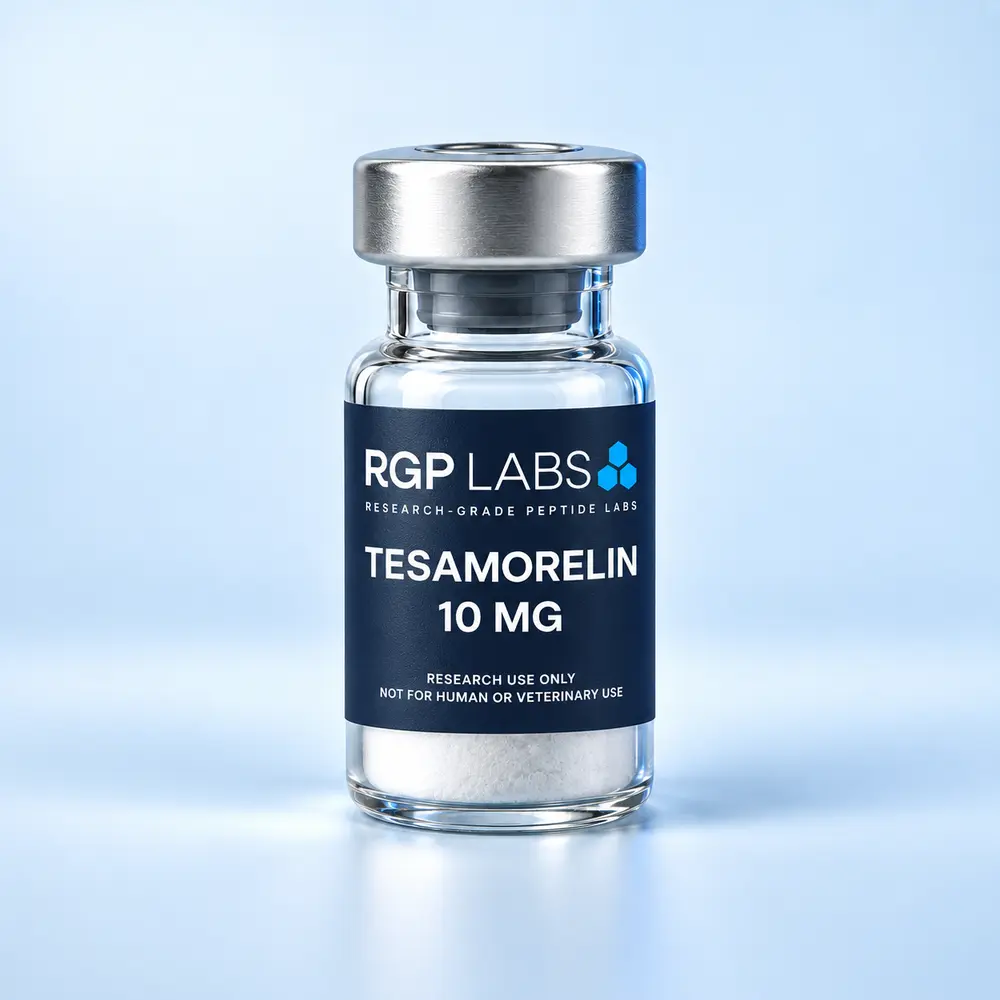
Tesamorelin is a stabilized grf analog (th9507) listed for controlled laboratory research. The planned RGP Labs presentation is a sealed vial of lyophilized material, with the catalog strengths shown above. Review current ordering options through the Shop Now link. This page does not describe a medicine, consumer product, compounded preparation, or material intended for administration.
The reference catalog describes this material in the context of growth-hormone-axis and peptide-stability models. That context is summarized here as a research classification, not as evidence of safety, effectiveness, or a biological outcome. Experimental conclusions depend on the study design, controls, methods, material characterization, and the actual lot used. RGP Labs therefore separates general compound information from batch-specific analytical evidence.
The short catalog name is not a substitute for a complete material specification. Before procurement, a qualified team should reconcile the requested identity, form, labeled quantity, and planned research use with the final lot record. Similar commercial names can conceal meaningful differences in form, counterion, moisture, excipients, or analytical scope.
Research material options for Tesamorelin
The planned catalog strengths are 10 mg, 20 mg. Confirm current options, availability, and order details on the linked RGP Labs form.
How should a lab evaluate Tesamorelin documentation?
Start by matching the vial label to the exact lot named on the analytical report. A useful Certificate of Analysis should identify the sample, compound or blend, labeled strength, lot, test date, laboratory, method, result, and any stated limitations. A report for a previous batch, a supplier standard, or an unrelated sample should not be presented as proof for current inventory.
Identity and purity are different analytical questions. Chromatographic analysis may describe the relative peaks detected under a stated method, while mass analysis may support the molecular identity of an observed species. A single percentage without the complete report cannot establish every relevant property. Blends may require additional consideration because a method suitable for one component may not fully characterize the others or their proportions.
A published research paper or general material description cannot authenticate a particular RGP Labs lot. Request the applicable lot-specific documentation before relying on a quality claim, and use the Research Library guide to analytical reports to understand the questions a report can answer.
Important documentation ruleA report supports only the sample and lot it identifies. The brand, product name, or vial photograph cannot replace lot-specific analytical evidence.
Planning controlled research with Tesamorelin
Define the material and documentation requirements before adding a vial to a study workflow. A study plan should identify the intended in-vitro question, selected strength, quantity, acceptable lot strategy, controls, analytical acceptance criteria, and receiving procedure. If all vials must share one lot, that requirement should be recorded before fulfillment. If multiple lots are acceptable, the study file should identify which lot was used in each run.
Storage and handling decisions should follow the authenticated lot specification and a facility-approved procedure. The reference listing describes a lyophilized presentation and cold long-term storage with protection from repeated temperature cycling, but RGP Labs must validate those details for its own material before they become instructions. This page intentionally omits personal reconstitution, injection, dosage, or administration directions.
Lot traceability and receiving records
On receipt, laboratory staff should compare the shipment with the procurement record, inspect the package and label, record the lot reference, and preserve the matched documentation. Any discrepancy in material name, strength, vial count, physical condition, or lot should be resolved before the material enters a study workflow. The receiving record should make it possible to connect a later observation to the exact material used.
Traceability becomes especially important when a project continues across multiple shipments. Different lots should not be treated as interchangeable without an appropriate evaluation. Internal labels, aliquot records, storage logs, and sample-preparation records should maintain the original lot reference. The RGP Labs quality-testing framework explains how identity, purity, and record integrity fit together.
Research-use limitations for Tesamorelin
RGP Labs lists Tesamorelin strictly as a laboratory research material. It is not approved or supplied for use in humans or animals and is not represented as safe or effective for any medical, veterinary, dietary, cosmetic, or household purpose. The listing does not provide a route of administration, consumer preparation method, regimen, diagnosis, or treatment recommendation.
Prospective purchasers are responsible for determining whether they are qualified and legally permitted to acquire and work with the material. They must maintain suitable facilities, controls, training, documentation, waste practices, and institutional oversight. Review the complete research-use-only policy before ordering.
Frequently asked questions about Tesamorelin
What Tesamorelin strengths are included in the RGP Labs catalog?+
The planned listing includes 10 mg, 20 mg. Confirm current options on the linked order form before submitting.
Is RGP Labs Tesamorelin intended for human use?+
No. The material is described strictly for qualified in-vitro laboratory and analytical research. It is not intended for humans or animals.
What documentation should accompany a Tesamorelin lot?+
The applicable record should identify the compound or blend, labeled strength, lot, testing laboratory, report date, methods, results, and limitations.
Where can I request Tesamorelin?+
Use the Shop Now link to open the RGP Labs order form and review current options there.